From the Table Out
September 21
Nine o'clock. The country stops for one minute, as it does every morning.
Today the calendar gives the day a name. International Day of Peace. This year it carries a theme: Investing in Peace — for everyone, everywhere, every day.
In New York earlier this month the Secretary-General rang the bell for it. He said that “where governments are failing to deliver peace, people are showing another way.”
Here, the minute. Then 9:01.
The table.
In June it was moved to its final place. Neighbours arrived after dark, by horse and cart.
One evening in the first week a neighbour walked up with fresh dairy.
Those first days ended at the table, before sunset. The work that was left got done after.
There is another table, in another country. I do not know if my family will sit at it together again.
A kitchen table gets laid, cleared, laid again. Nobody signs anything.
The valley.
In August the trough stopped. A spring had fed it for generations. Down in the town the taps went dry, and tankers carried water to the hospital.
I walked the springs and the creeks — which still ran, which had failed. With my host, a plan: cisterns for winter melt and storm water, kept for the dry weeks. For this farm. Then maybe the next ones.
Seven solar panels came from a factory in China. The last stretch up the mountain they rode behind two horses.
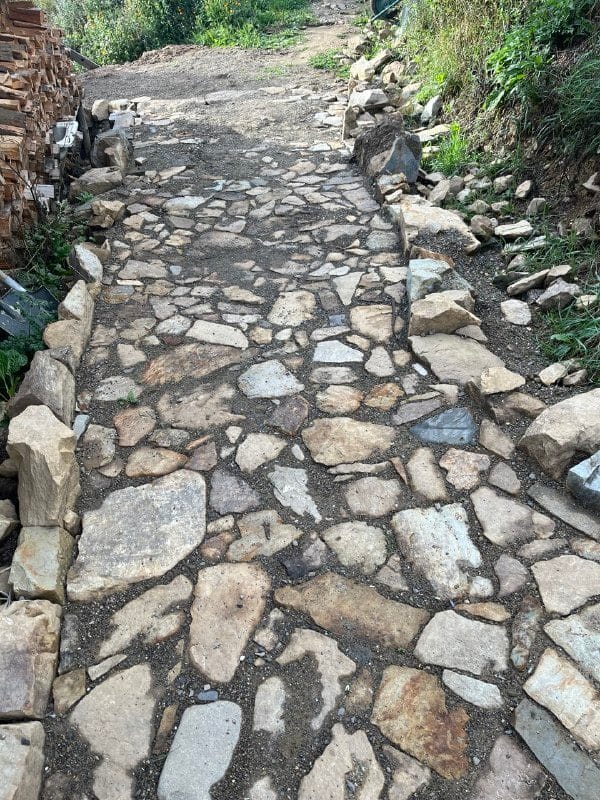
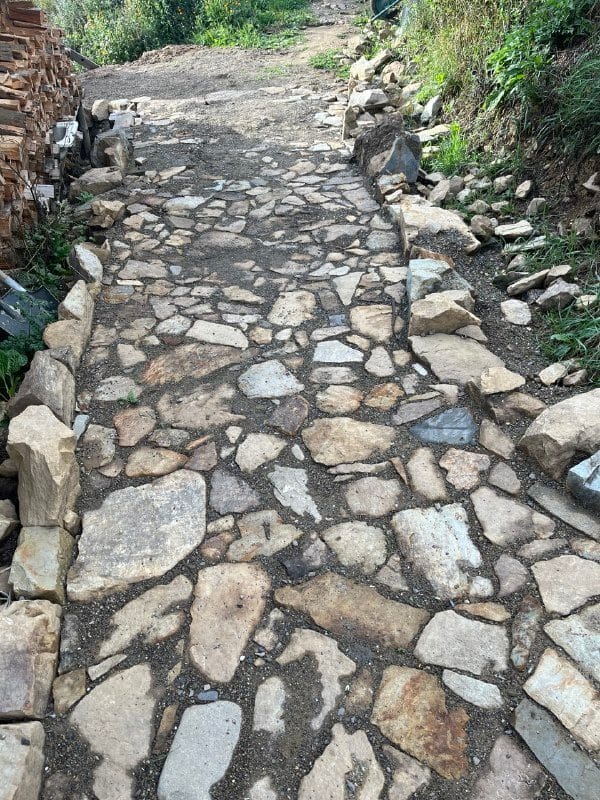
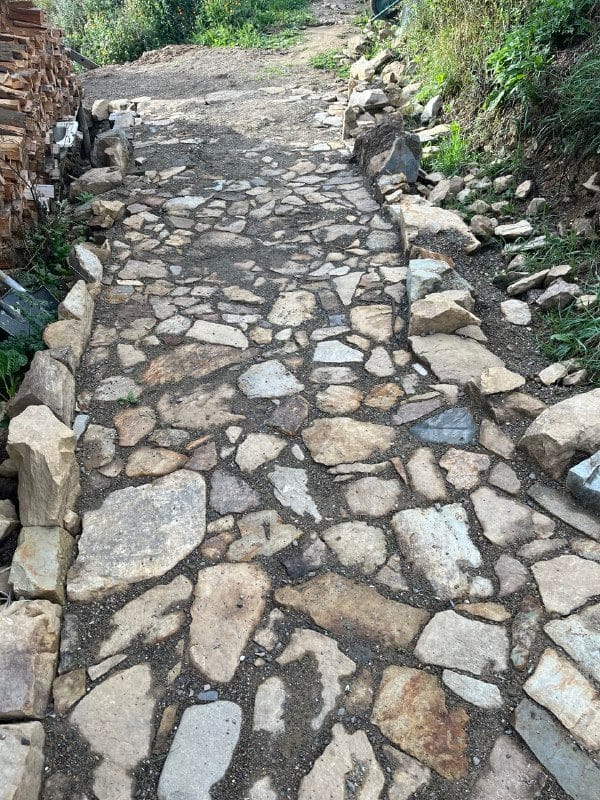
The path between the buildings is stone from the site, on sand a ZIL-131 brought up. One stone at a time.
In town a club meets to speak English. Speaking and listening are the practice.
The word here is toloka. Neighbours turn up and do together what none could do alone.
The country.
On the train from Lviv a young man from Kyiv bought my bus ticket to the valley. He would take nothing for it.
In June, on the road to town, a procession. About thirty cars, each flying two flags — blue and yellow, red and black. An ambulance third in line. People kneeling. The second in four days.
In a city, a full day in an office for one word on a form. Volunteer. Jets overhead.
The full-scale war is in its fifth year. This month two envoys sat at a table in Moscow for more than three hours, then took the train to Kyiv. No breakthrough was announced. More talks are expected in October. There is no date.
The border.
On the first day the Oder opened wide under the train. The far bank was already Poland.
Letters come from Germany and from Canada. They ask why Ukraine.
The same calendar, elsewhere.
Iran — strikes since the last day of February. A ceasefire in April, a memorandum in June, strikes again.
Gaza — a ceasefire nearly a year old. Close to seventy-four thousand dead by the health ministry's count, some fourteen hundred of them since the ceasefire. Most buildings damaged or destroyed. At last count more than a million people without permanent shelter.
Sudan — 33.7 million people in need of aid. Famine in El Fasher and Kadugli.
Eastern Congo — a roadmap for talks agreed in August. Fighting since.
Myanmar — the sixth year. More than ninety thousand dead.
Mali — Kidal fallen in April. Offensives across the country since.
Mexico — no war declared. Forty murders a day in August, by the government's count. Two years ago it was eighty-seven. The disappeared are counted separately.
Colombia — ten years after a peace accord. In Catatumbo two armed groups fight over the coca country. A hundred thousand people have fled, close to a third of the region.
One index has counted peace declining twelve years running. 103 countries in a conflict beyond their own borders within the last five years. 117.8 million people displaced at the end of last year.
By that index, close to five hundred people a day killed in conflicts inside their own countries. By another count, people driven from home by fighting close to ninety thousand times a day last year. The most ever recorded.
In the 1970s nearly one in four such wars ended in a peace agreement. In the 2010s, one in twenty-five.
That is the count from above.
In 1978 Václav Havel wrote about a greengrocer who puts a sign in his shop window, among the onions and carrots. Workers of the world, unite. He does not believe it. He puts it up to be left alone.
One morning he does not put it up.
Eleven years later the man who wrote that was president.
South Africa built a room beside the court. The people who had to live in it built it.
The count from here.
One table at a time.
One path, begun.
Seven panels, installed.
One plan for water.
One club that did not exist in June.
Two weeks in a room in these mountains, asking whether an idea can help end a war.
What if it is built the way the path is — from what is already lying on the ground?
One word, toloka, older than any programme that will ever arrive to teach it.
Tomorrow at nine the minute comes again, and at 9:01 the day.
Day 93 — Aufbau — Soil and Peace
Verkhovyna, Carpathian Mountains, Ukraine
© 2026 Michel Garand | Soil and Peace | CC BY-SA 4.0
stewardship@ubec.network